

Новости
Seven Northern European Ports Back Cross-Border Automated Freight Programme
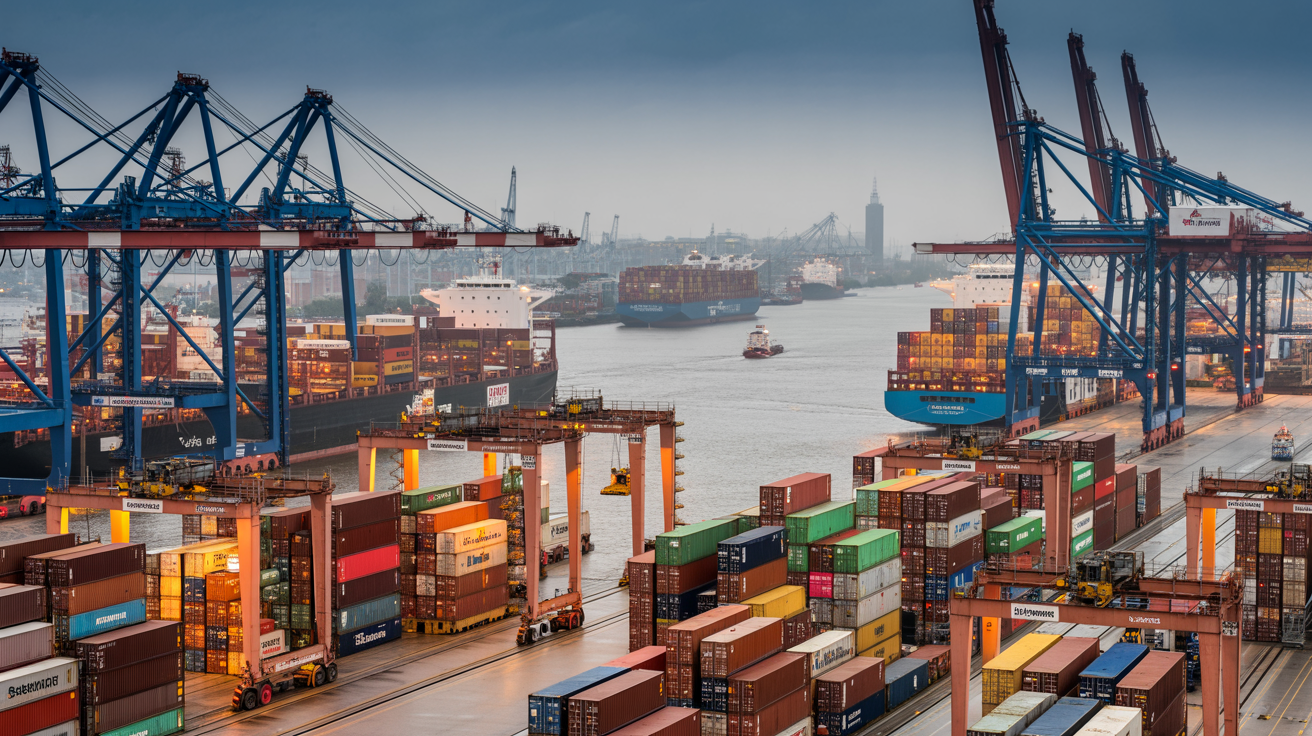
Seven major ports in Northern Europe, together with the governments of Flanders, the Netherlands and North Rhine-Westphalia, have agreed to remove regulatory barriers and speed up the rollout of automated freight transport and energy infrastructure. The focus is the strategic Antwerp–Rotterdam–Rhine–Ruhr (ARRRA) corridor.
BGLOGIST examines the agreement and its implications for European logistics.
Participating Ports
The deal, reached at the Port Summit in Meise, involves:
- Port of Antwerp-Bruges
- Port of Rotterdam
- North Sea Port
- Duisport (Duisburg)
- Port of Cologne/HGK
- Port of Moerdijk
- Port of Oostende
Regional authorities from Belgium, the Netherlands and Germany are fully behind the initiative.
Four Strategic Priorities
The partners outlined four clear priorities:
- Strengthening circular value chains and creating a cross-border market for secondary raw materials
- Accelerating energy infrastructure development (hydrogen, CO₂ transport and storage, pipelines)
- Improving the resilience of inland waterways against climate risks
- Innovative logistics — automated freight transport by road and inland waterway, plus harmonised rules for drone operations
One of the most concrete measures is the planned use of cross-border corridors, starting with the Antwerp–Rotterdam route, for automated freight movements both on roads and waterways.
Why ARRRA Matters
The Antwerp–Rotterdam–Rhine–Ruhr area is the largest port-industrial cluster in the European Union. It generates around €65 billion in added value and supports nearly 600,000 jobs. The three governments now plan to ask the European Commission to formally recognise ARRRA as a strategic European port and industrial cluster.
Rotterdam World Gateway invests €500 million in fourth berth
DP World launches first end-to-end rail delivery of vehicles from Zeebrugge
METRANS expands terminal in Gądki near Poznań
EU invests nearly €2.8 billion in 94 transport projects
DHL Group invests more than €400 million in Central and Eastern Europe
Nurminen and Tarros launch North–Mediterranean intermodal corridor
Maersk opens 71,800 m² logistics centre in Germany
Uber Freight expands 4PL operations in Europe
What This Means for the Market
By reducing regulatory differences between the three jurisdictions, the agreement removes a major obstacle to scaling automated freight solutions across borders. This could accelerate the commercial deployment of autonomous trucks and inland vessels, improve corridor efficiency and reinforce Northern Europe’s position as a technology leader in port and multimodal logistics.
BGLOGIST will continue to monitor pilot projects on the Antwerp–Rotterdam corridor and the progress of ARRRA’s recognition at EU level.
Source: Port of Rotterdam / Port of Antwerp-Bruges / industry reports (5–7 October 2026).
Prepared exclusively for https://bglogist.com — experts in transport logistics.